
| Historia |
|
|
![]()
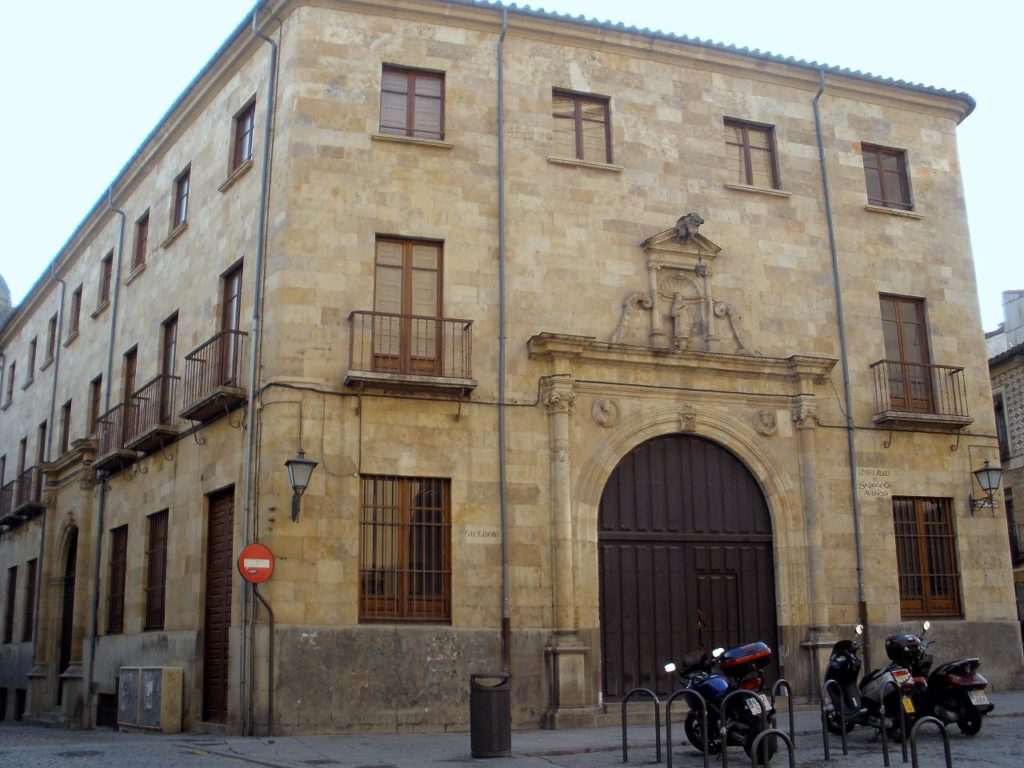
Foto: Edificio San Bartolomé, en la Plaza de Fray Luis de León 1-8,
donde se ubica el Centro de Estudios de la Mujer de la Universidad de Salamanca.
El Centro de Estudios de la Mujer de la Universidad de Salamanca, de carácter docente e investigador, inicia sus actividades como Centro propio de la Universidad en enero de 2002, aunque sus orígenes hay que situarlos en torno al año 1997, cuando un grupo de profesoras de la Universidad de Salamanca, interesadas en los estudios de La Junta de Gobierno de la Universidad –en sesión ordinaria de 25 de noviembre de 1999- aprobó la creación del Centro de Estudios de la Mujer de la Universidad de Salamanca. Con fecha 1 de enero de 2002, el Rector de la Universidad de Salamanca nombró directora comisaria del mismo a la doctora Ana Díaz Medina, profesora Titular de Historia Moderna, la cual ejerció este cargo hasta que, tras haber sido elegida por el Consejo del Centro, fue nombrada por el rector, el 3 de mayo de 2006, nueva directora la doctora Mª Esther Martínez Quinteiro, profesora Titular de Historia Contemporánea que en la actualidad, tras haber sido reelegida por el consejo del Centro el 3 de junio de 2010, sigue ocupando dicha dirección.
Foto: 20 de julio de
2010: Toma de posesión de nuevos cargos académicos de la Universidad de Salamanca
el en el Salón Rectoral de la Casa Museo
Unamuno, presidida por el Rector Daniel
Hernández Ruipérez: A la izquierda, Mª Esther Martínez Quinteiro, durante la
toma de posesión del cargo de directora del CEMUSA, para el que, por segunda vez, ha sido electa
por el Consejo del Centro de Estudios de la Mujer de la Universidad de
Salamanca.
Desde su creación como Centro Propio de la Universidad de Salamanca se han venido realizando las gestiones necesarias para mejorar su dotación y asegurar su operatividad, tareas que fueron desde su primera instalación en el edificio Aulario de San Isidro de la Universidad, hoy sede de la Unidad de Igualdad, hasta su actual ubicación en la Plaza Fray Luis de León 1-8, planta baja del edificio San Bartolomé de la Universidad de Salamanca, donde se hallan su secretaría y el despacho de dirección y donde puede consultarse su fondo bibliográfico. El mantenimiento y puesta al día de este último sigue siendo uno de sus empeños, con el objeto de facilitar las tareas de docencia e investigación a los miembros del Centro. Dicho fondo ha ido ampliándose tanto con donaciones de entidades públicas y privadas, como con las adquisiciones periódicas que realiza el Centro a través del Servicio Bibliográfico de la Universidad. Así mismo se ha procedido a la localización, reproducción y catalogación de artículos de temáticas de género dispersos en revistas especializadas de diferentes áreas de conocimiento. En marzo de 2010 se habilitó en el segundo piso del edificio San Bartolomé una habitación para albergar la filmoteca y la fonoteca. La información a la comunidad universitaria y extrauniversitaria sobre la entidad y objetivos del CEMUSA, junto al esfuerzo realizado para la captación de capital humano y la puesta en marcha y difusión de sus actividades docentes y formativas, así como la divulgación de sus investigaciones, han cristalizado en un notable incremento de sus miembros, cuyo número se acerca a los dos centenares, y de la presencia del mismo tanto de la Universidad de Salamanca como en las numerosas instituciones públicas y privadas que reclaman su colaboración o asesoramiento.
Las disposiciones legislativas del último lustro, singularmente la L.O. 3/2007 de 22 de marzo para la Igualdad efectiva de mujeres y hombres y la L.O. 4/2007 de 12 de abril, Modificación de la Ley Orgánica de Universidades 6/2001, entre otras, aportan sin duda un inestimable apoyo a los objetivos, fines y metas del CEMUSA, constituyendo una invitación al estudio e investigación de su interpretación y contenido por las expertas/os del Centro, así como al compromiso de luchar por hacer efectivo el contenido de las mismas.
Women Studies Centre in the
University of
Salamanca starts its activities as a centre belonging to the University in January 2002, though its origins may be located around 1997, when a group of women teachers from the
University of
Salamanca , interested in Genre Studies from their different areas of knowledge, create the Women Studies Seminar. Some of the people linked to this Seminar – now disappeared- had been teaching subjects relate to genre themes for years and decided to begin a doctorate programme. (Studies on Women and genre relationships, two-year period 1998-2000), ask aids from the State for research projects and organise extraordinary courses and conferences about this topic (I and II Jornadas de Historia de las Mujeres¸ Seminario Crítica Feminista; Seminario Conocimiento del Pasado: una herramienta para igualdad). It was this effort and great volume of work what made necessary and suitable the creation of a Studies Centre about Women as an institution belonging to the University of Salamanca, the only one of this nature in Castilla y León The Governing Body of the University on the 25th of November 1999 approved the creation of the Women Studies Centre of the University of Salamanca on the 1st of January, 2002. The Rector of the University of Salamanca named Doctor Ana Diaz Medina – Full Professor of Modern History- director, who played this rol until the moment that Esther Martínez Quinteiro- Full Professor of Contemporary History- after having been elected by the Board of the Centre , was name director by the Rector on the 3 rd of May 2006, and who nowadays and after having been re-elected by the Board of the Centre on the 3rd of June 2010, is still in this position. Salamanca , the only one of this nature in Castilla y León. Women Studies Centre has a multidisciplinary and interdepartmental nature and according to its statutes: “ ...its research and activities are framed in what in the Academy has been called perspective of genre. The perspective of genre assumed by the Women Studies Centre guides the work and research on women from the historical and critical theoretical paradigm not only to know the reality of the unequal genre relationships and deepen into their causes, but also to contribute to the transformation of reality”. Since its creation as a Centre belonging to the University of Salamanca, we have been carrying out the negotiations needed to improve its endowment and assure its effectiveness from the first place in the Aulario de San Isidro Building, today Central Office of the Equality Unit, until its present location in 1-8 Fray Luis de León Square, ground floor at the San Bartolomé Building of the University of Salamanca, where it may be found its Secretary and the Head Office where you can consult the bookstock. The keeping and updating of this last one is still one of its challenge, with the aim of making easy the teaching and research tasks of the members of the centre. This bookstock has been enlarged with endowments from public and private organisations and the periodical acquisitions which the centre made through the Bibliographic Service of the University. Likewise it has been carried out the location, reproduction and cataloguing of articles about genre themes spread in specialised magazines of different areas of knowledge. In March 2010 it was prepared on the second floor of San Bartolomé Building a room to shelter the film and sound archives. The information provided in and out of the academic community about the organisation and objectives of CEMUSA, together with the effort made to attract people and to start and spread its teaching and formative activities, so as the circulation of its researchs, have led to a remarkable increase of its members - almost 200- and its presence not only in the University of Salamanca but also in the great number of public and private institutions which ask its collaboration and advice. The orders from the last five years, especially L.O. 3/2007 de 22 de marzo para la Igualdad Efectiva de Mujeres y Hombres and L.O. 4/2007 de 12 de abril, Modificación de la Ley Orgánic de Universidades 6/2001, among them, doubtless bring an invaluable support to the objectives, aims and goals of CEMUSA, making an invitation to the study and research of its interpretation and content by the expertises in the centre and also the commitment to the fight to make effective the content of the laws.
|


Género